
When Privilege Becomes Purpose: Why Helping the Underserved Strengthens Everyone, Including You
• 4 min read

Mohd Faizan
Co-Founder & Secretary, AEHSAS Foundation
Passionate about equity, education, and enabling underserved communities through actionable change.
In a world as deeply unequal as ours, privilege can either be a comfortable cushion or a catalyst for change. For those who have access to clean water, quality education, healthcare, and a secure environment, it's easy to forget that millions in India and beyond still struggle for these basic human needs.
But here's the truth we don't often talk about: supporting the underserved isn't just a moral responsibility—it's an investment in a stronger, more resilient society. And it benefits everyone, including the privileged.
Privilege Is Not a Burden: It's an Opportunity
If you have the means to choose where you live, what school your child goes to, or when to see a doctor, you are already among the fortunate. But what makes privilege meaningful is how it is used.
When you use your position to uplift others, you transform privilege into purpose — that creates a ripple far greater than charity.
Necessity Is Not a Luxury
Across India, countless children miss school because of poor sanitation. Many young girls drop out due to lack of menstrual hygiene support. Rural families walk kilometres for clean water. These are not luxuries, they are essentials that form the foundation of dignity and development.
When privileged individuals step forward to support these needs — through donations, mentorship, volunteering, or advocacy — they don't just change one life. They change a community. And communities shape the nation.
The Ripple Effect
You may ask: "What difference will my support make to me?" The answer is: more than you think.
1. A Stronger, More Stable Society
When underserved populations have access to education, healthcare, and hygiene, crime decreases, productivity increases, and society becomes more secure for all. Prosperity is contagious — when one part of society rises, the other part benefits too.
2. Health Security for All
COVID-19 taught us a hard lesson: public health cannot be private. Supporting hygiene, sanitation, and disease prevention in rural and underserved areas reduces risks for everyone, including urban, affluent populations.
Health security is everyone's business. Ensuring basic healthcare and hygiene in underserved areas protects us all from global health threats.
— Dr. Tedros Adhanom Ghebreyesus, WHO Director-General
3. A Better Environment to Live In
Waste, pollution, and deforestation don't respect boundaries. When you support environmental awareness and conservation in underserved areas, you're also protecting air quality, water sources, and natural balance that affects the entire ecosystem.
4. A More Competitive, Future-Ready India
Every rupee, every effort put into ensuring basic human needs — clean water, sanitation, health, education — removes a weight that holds us back.
Once these essentials are secured, India can shift focus to higher-order goals: advancing technology, fostering innovation, building global industries, and leading climate solutions.
When we invest in the health and education of the most vulnerable, we unlock the potential of entire communities. This creates a ripple effect that benefits economies and societies at large.
— Melinda French Gates, Co-Chair, Bill & Melinda Gates Foundation
Eradicating poverty and lack of access is not the end—it is the beginning.
From Guilt to Growth: Redefining Philanthropy
In India, many who are privileged hesitate to get involved, unsure how or where to start. But giving doesn't have to be grand. What matters is that it's consistent and meaningful.
For example:
- Sponsor a student's school year.
- Contribute to hygiene kits for girls.
- Fund a water filter in a remote village.
- Advocate for environmental justice in local forums.
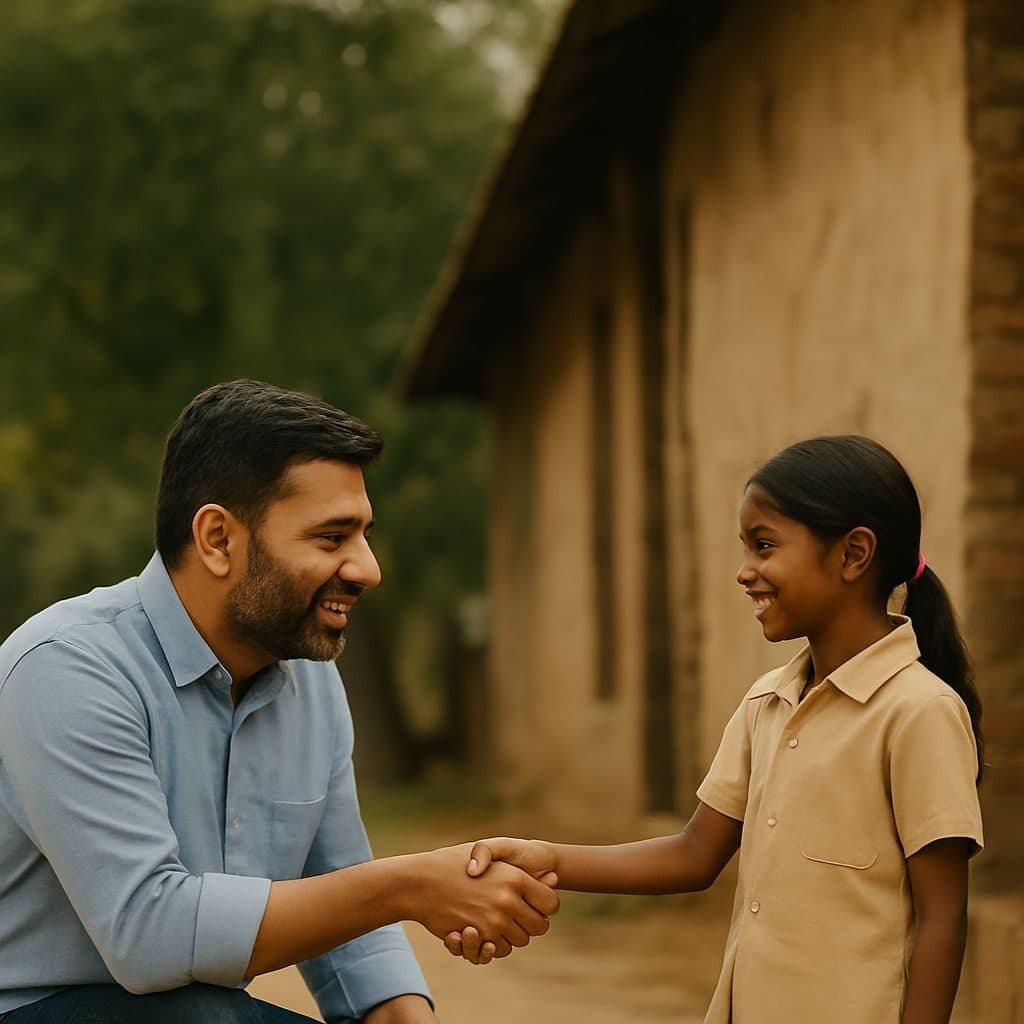
These are not handouts. They are handshakes, building a country that works for all.
Closing Thought: One Nation, Shared Future
India's potential doesn't lie in its few; rather, it lies in its many. If the privileged walk alone, the journey will be short. But when they join hands with the underserved, the path widens. It becomes a bridge across inequality, leading to a healthier, smarter, greener, and more competitive India.
At AEHSAS Foundation, we believe that those who have more are not the finish line; they are the starting point. Together, we can ensure that progress is not a privilege, but a shared promise and a national advantage.
Share this post
Related Posts

The Perils of Artificial Intelligence: Safeguarding Humanity in an Age of Advancements
A deep dive into existential risks, psychological shifts, and global regulatory realities in 2026 — from P(doom) surveys to the EU AI Act.

Landscape of Education in Contemporary India: Progress, Paradoxes, and Possibilities
An overview of how education in India has expanded in access while still facing deep gaps in learning quality, equity, and real-life relevance.