
Landscape of Education in Contemporary India: Progress, Paradoxes, and Possibilities
• 8 min read

Ateefa
M.A. (English Language Teaching), AMU
Writes on education, equity, and community-driven pathways for social change.
Education in contemporary India stands at a powerful yet uneasy crossroads. Over the past decade, the country has made significant strides in expanding access to schools, colleges, and digital learning platforms. Policies have evolved, institutions have multiplied, and technology has reshaped classrooms. Yet, beneath this progress lies a more complex reality, one where millions of children attend school without truly learning, where inequality continues to define opportunity, and where education often feels disconnected from real life.
The landscape of education in today's India is therefore not a simple story of success or failure. It is a story of promise and paradox, of reform and resistance, of classrooms full of students but minds still waiting to be nurtured. This blog explores that landscape through policy shifts, data trends, lived experiences, and grassroots innovations, highlighting where we stand and where we must go.
A Decade of Change: From India of 2014 to Bharat of 2024
The period between 2014 and 2024 has been transformative for India's education sector. Enrollment numbers have increased, student-teacher ratios have improved nationally, and education has moved closer to the center of public discourse. The introduction of the National Education Policy (NEP) 2020 marked a philosophical shift from rote learning toward holistic, skill-based, and flexible education.
At the same time, India's broader economic and technological growth influenced education deeply. The rise of digital platforms, online learning, and a thriving startup ecosystem brought innovation into classrooms. Education began to be discussed not just as a social obligation, but as a driver of national development.
Yet, transformation on paper does not always translate into transformation on the ground.
Expanding Access, Uneven Outcomes
One of the most significant achievements of contemporary India has been the expansion of access to education. According to the Unified District Information System for Education Plus (UDISE+), enrollment at the primary level is now close to universal. More girls are entering schools, and early childhood education has been formally integrated into the system. Schools exist in most habitations, and literacy levels have improved steadily.
However, access alone does not guarantee learning.
Ground Reality: When Schooling Doesn't Mean Education
A report from Outlook India notes that while attendance and classroom participation in rural government schools across states like Uttar Pradesh and Bihar appear steady, learning outcomes, particularly in reading and arithmetic, still depend heavily on the quality of physical classroom teaching. As highlighted in the report, ASER 2023 found that over 50% of children in Class 5 in rural India could not read a Class 2 level text, and only 46.3% could perform basic arithmetic operations appropriate for their grade.
These learning assessments reveal a troubling gap: students in upper primary classes often struggle to read a basic paragraph or solve simple arithmetic.
A child may complete five years of schooling and still lack foundational skills. This gap between being in school and being educated remains one of the most pressing challenges in contemporary India.
Quality of Education and the Learning Crisis
The question today is no longer "Are children enrolled?" but "Are children learning?"
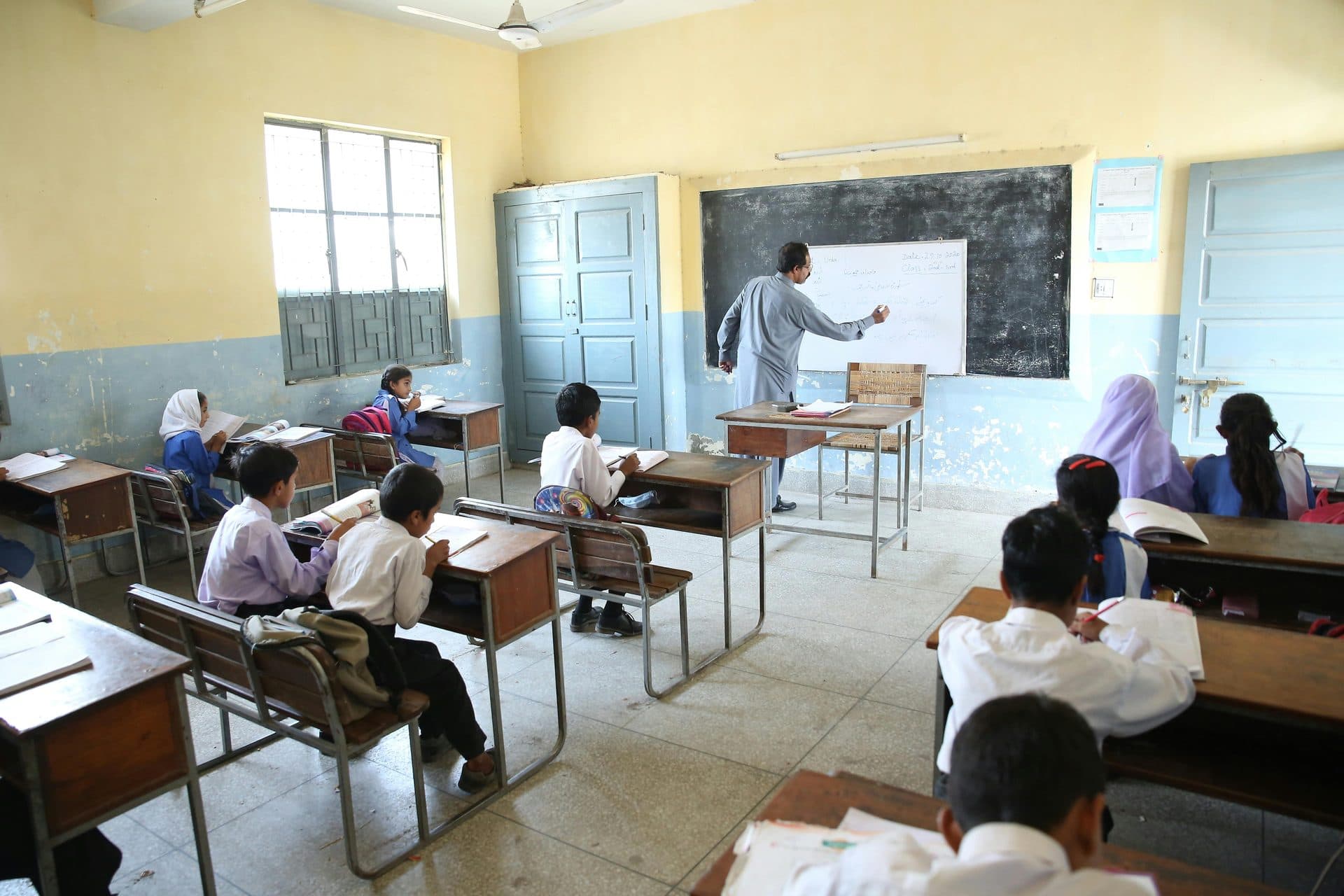
While elite private institutions offer experiential learning, digital tools, and global exposure, a large number of government schools continue to struggle with overcrowded classrooms, limited resources, and teacher shortages.
Case Study: The Multi-Grade Classroom
In many villages, a single teacher manages multiple classes in one room. Teaching becomes survival-focused rather than learning-focused. Rote memorization replaces understanding, and children move from grade to grade without mastering the basics.
NGOs running remedial learning centers in these regions have demonstrated something important: when children receive focused, level-appropriate teaching, even for a few months, their learning improves dramatically. This shows that the problem is not the child's ability, but the system's capacity to teach effectively.
The Burden of Rote Learning
India's education system has long been dominated by exams, memorization, and standardization. Students are trained to reproduce answers rather than think critically. Creativity, curiosity, and emotional development often take a back seat.
Teachers, too, face challenges. Many enter classrooms with limited training, little ongoing professional support, and inadequate infrastructure. Parents express frustration that years of schooling do not translate into practical skills or life readiness.
Education, in many cases, feels disconnected from reality, preparing students for exams, not for life.
Digital Education: Opportunity with Exclusion
Technology has become one of the most powerful forces shaping contemporary education. Online platforms, digital classrooms, and educational apps have expanded access to information and learning resources. The pandemic accelerated this shift, making digital education a necessity rather than a choice.
But technology has also exposed deep inequalities.
Real-Life Example: The Digital Divide
In many low-income and rural households, one basic smartphone is shared among multiple children. Internet connectivity is unreliable. During online schooling, boys often attend classes while girls manage household responsibilities. Some children walk long distances to access a mobile network.
NGOs stepped in with offline materials, community learning groups, and blended solutions, proving that technology must be adapted, not blindly implemented. Without equitable access, digital education risks widening the very gaps it aims to close.
Girls Education: Progress with Persistent Barriers
India has made visible progress in enrolling girls in schools, yet adolescent dropouts remain common. Early marriage, domestic responsibilities, safety concerns, and lack of nearby secondary schools continue to disrupt girls' education.
Case Study: Bringing Girls Back to Learning
In parts of Rajasthan and Jharkhand, NGOs worked with families to re-enroll girls who had dropped out after Class 8. Through parental counseling, flexible learning schedules, bicycles for safe travel, and mentorship, many girls returned to education and completed secondary schooling.
These stories remind us that girls do not lack ambition; they lack support.
Higher Education: Growth Without Assurance
India's higher education sector has expanded rapidly. Universities and colleges have multiplied, and student enrollment has grown significantly. More women are entering higher education, and new disciplines have gained popularity.
Yet, serious challenges remain. Indian institutions struggle with global competitiveness, faculty shortages, and uneven quality. Many graduates, especially first-generation learners, leave college without career guidance, soft skills, or industry exposure.
Education raises aspirations, but without support, those aspirations often meet disappointment.
Reimagining Education from the Margins
Some of the most hopeful innovations in Indian education come not from large institutions, but from the margins.
Grassroots initiatives like street schools and community learning centers challenge the idea that education must happen only within formal classrooms. By bringing learning directly to children living in slums, on streets, or in migration-affected communities, these models center dignity, safety, and emotional well-being.
They combine literacy with life skills, counselling, health awareness, and vocational preparation, reminding us that education is not just about marks, but about becoming human.
NEP 2020: Vision and Reality
The National Education Policy 2020 offers a bold vision: foundational literacy, flexible learning pathways, multidisciplinary education, reduced exam pressure, and holistic assessment. It seeks to move education away from memorization toward critical thinking and creativity.
However, implementation remains uneven. Digital gaps, teacher preparedness, administrative challenges, and social inequalities limit its impact. Policy alone cannot transform education without community engagement, accountability, and sustained grassroots support.
The Role of AEHSAS Foundation: Bridging Policy and People
Non-governmental organizations play a crucial role in India's educational ecosystem. By working directly with communities, AEHSAS Foundation bridges the gap between policy intent and lived reality. We support out-of-school children, strengthen foundational learning, train educators, and build trust with families.
Education, when rooted in community and compassion, becomes transformative.
Conclusion
The landscape of education in contemporary India reflects both immense progress and deep challenges. Access has expanded, policies have evolved, and innovation has accelerated. Yet, inequality continues to shape who learns, how they learn, and what futures education enables.
To truly transform education, India must move beyond enrollment numbers toward meaningful learning, beyond uniform solutions toward context-sensitive approaches, and beyond policy promises toward real impact on the ground.
Education must not merely produce workers—it must nurture thinkers, citizens, and compassionate human beings. The future of India depends not just on how many children enter classrooms, but on how deeply education touches their lives.
Call to Action
At AEHSAS Foundation, we believe education must go beyond enrollment to empowerment. Through equitable learning initiatives, mentorship, teacher support, and community engagement, we work to ensure that education becomes a pathway to dignity, opportunity, and lasting change for underserved communities.
We invite educators, policymakers, volunteers, donors, and concerned citizens to join us in this mission. Your support through time, resources, advocacy, or collaboration can help bridge learning gaps, keep children in school, and reimagine education as a tool for social justice.
Together, let us move beyond intent toward impact, because when education reaches the margins, it transforms the nation.
Share this post
Related Posts

When Privilege Becomes Purpose: Why Helping the Underserved Strengthens Everyone, Including You
Supporting the underserved isn't just a moral responsibility — it's an investment in a stronger, more resilient society that benefits everyone.

The Perils of Artificial Intelligence: Safeguarding Humanity in an Age of Advancements
A deep dive into existential risks, psychological shifts, and global regulatory realities in 2026 — from P(doom) surveys to the EU AI Act.